
In just under two weeks time, on 12th May, it’s National Limerick Day, where people post their favourite Limericks on Social Media, under the hashtag: #NationalLimerickDay!
Why May 12th? It was the birthday of the English Poet, Edward Lear, who was the king of limericks, making them popular in the early 1800’s.
A limerick? What’s a Limerick? I hear you ask. How do I write one? And why should I bother?.
And here is my answer!
It’s fun to sit down with a brew,
And come up with a limerick, or two,
It’s a juggle of thoughts,
A word-puzzle of sorts,
It’s a word-nerdy thing you can do!

Hahaha! A slightly silly response, granted. But here’s my logic: The very best way to learn how to write a Limerick is by reading them!
Definitely check out Edward Lear – https://www.britannica.com/biography/Edward-Lear – who apparently wrote 212 fine examples. You’ll soon get a feel for the rhythm and rhyme scheme.
But just to be clear, here are a few features of the Limerick:
- Limericks are humerous, rhyming, five-line poems, with the pattern: AABBA
- They often tell a little anecdote or story – which makes them really fun to write.
Like this:
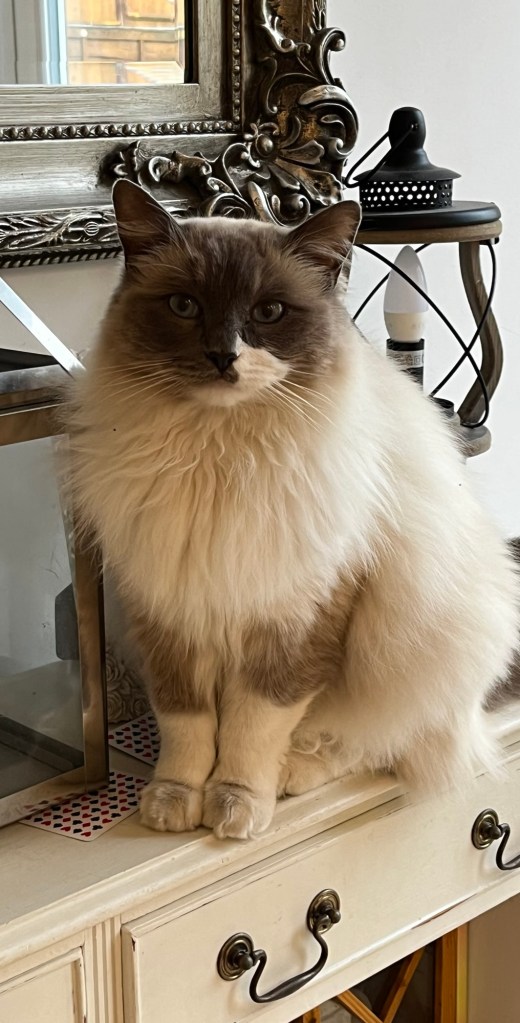
There once was a kitty so smart,
Stealing food was his devious art,
He would pilfer your chicken,
Next your ham, he’d be nickin’
Why, he’d even come back for your tart!
Our pets seem to feature quite regularly in my limericks – but, honestly, you can write a limerick about pretty much anything.
It could be educational:
Seeds are remarkable things,
Some have spikes, some rotate, some have wings,
Dandelion is cute,
With its seed parachute 🪂
But the best one of all sorta' PINGS!

 - you could even write a limerick about…writing limericks!
Writing lim'ricks is tricky, but fun,
Make sure lines five and two rhyme with one,
Add a killer last line,
(If it helps, drink some wine!)
Don't give up, you'll be glad when it's done!


So what are you waiting for? You've got just under two weeks to get scribbling!
Here are some tips to get you started!
- Pick one subject to write about- it could be your pet, a silly situation, a favourite film or book or even about yourself;
- Try and nail your last line early on – this is the line that ties everything together, and if done well, really gets the giggles;
- Remember, lines one, two and five all have to rhyme – so pick a common sound for your word-ending. Be creative with it! In some instances, forced rhyme can work quite well! (See last line of the second example below)
- If you’re stuck, try to avoid abandoning your subject idea altogether. Instead, walk away for a bit. There are more ways than one to say something. Limericks are like a puzzle. Often the answer comes when you’re busy doing something else, like walking the dog, or doing the washing up.
- A rhyming thesaurus can be really useful for those word endings, especially if you’re missing a beat or syllable
Oh, a rhyming thesaurus is grand,
It can help when your limericks are bland,
It can give you word power
At the e-leventh hour,
With names like: Pituitary Gland

There once was a cute little kitty,
Who would sit around looking so pretty,
But this act was a lie,
He was really a spy,
No you should not believe cats one bitty.
I hope this post has inspired you and that you’re running for your notebook and pencil as we speak! Perhaps you’ll be brave enough to post them on #NationalLimerickDay!
Happy writing!



 Angela Jelf